Music Business - Five things you need to do online

Talent is nothing without marketing. You could be a great musician, vocalist, producer, etc but the world will never know if you do not employ the effective methods of promotion.

1. Using proper opinion leaders is very important. Radio and the Press are staples, of course, but you should seek out other opinion leaders online and get them to push your story as well. The web reaches millions and there is no reason why you should not tap into this resource.

2. Having a professional website is another concern. The site should allow users to get to where they want and access information with only a few clicks. This is important especially if you plan to make any sales using the website. You should also make sure that the website is not just a copy of material that can be found anywhere. Rather, it should be different enough while complementing you offline material.

3. Be everywhere you can on the internet. Be it social media networks, blogs, forums, etc get on it and be active. Your own website should also be full of helpful information providing the right information about you as well as other topics of musical interest.

4. Consider everyone when you design the site. Not all users online possess fast connections. However, the site must be designed in a way that it looks good while being accessible to all. Focus on search engine optimization so that you can be found easily.

5. Do not have a hit and run site. The frequency with which information is updated and your interactions with visitors to the site must be high. Otherwise, people will lose interest.

The Digital Domain Now Has Changed the Face of the Music Industry

The music industry was a very tightly controlled business not so very long ago. The record labels made the bulk of the money and the folks who bore the brunt of the work got what was left over. Surprising as it sounds, that is how it worked.

Songwriters come up with lyrics that are selected by an A&R (Artist and Repertoire) representative who then, gives it to a band who proceed to record it. The album sells millions, the band goes on tour and the record company rakes in the profits. This was how agreements were set up. The rest of the people who were involved had to shut up and put up with it, if they wanted to make it in the industry.

Things did change slightly over the years, and a little more was shared by the record companies but it was nothing compared to what they were still making. Then along came the Internet and its fabulous sharing concepts. Suddenly, anyone and everyone could sell their talent without being slaves to the record companies. They could get popular over the internet, master their own tracks and even cut their own CDs for sale.

Several artists were discovered this way with apparent financial benefits. This gave people bargaining power when record labels wanted to hire their talent to a roster of accomplished musicians in the business.

However, it is not easy. Taking the internet route involves a lot of hard work and perseverance. Despite the overwhelming odds that an artist has to overcome to making it big, the internet has given millions an opportunity that they could only dream of before, and thus has leveled the playing field for artists and bands that were denied access to, prior to the internet.

Making it in the Music Industry

Careers in Law, Business, Engineering, etc have a well-defined path you can follow if that is where your interest lies. Because of the path being so structured, it is easy to gauge yourself and receive enough guidance to get to wherever you want to go. The Music industry is not at all like this.

If you want to get into the music business, several avenues can be explored but none of them has a defined career path that you can follow. For example, you can choose to be a singer, musician, sound engineer, etc. If you choose the musician path and want to play Bass guitar, you can take a course that prepares you to play the instrument well. Beyond that, there is no place to apply to where you can play bass, get promoted, etc like in an office.

Getting into the music business is 20 % talent and 80 % hard work. You cannot be afraid of hard work if you want to make it in this business. The first step is, of course, is studying in the area of your choice and perfecting your skill as far as possible. After that, you need to find all the A&R (Artists and Repertoire) divisions that operate in your area. Make a demo, a resume and send it out to them as well as every studio you can think of. You have to promote yourself shamelessly or you will never be noticed.

It is all about being noticed, so until someone takes notice, you have to keep trying. While you do this, be prepared for rejection. Being turned down hundreds or thousands of times will require persistence until you get your shot at your dream job.

Is Piracy Online Still Going On?

Eight years have passed since Napster shut down. Ironically, the RIAA and the music industry are still fighting a futile war against music piracy. While piracy cannot be condoned in any way, you cannot help but wonder if there is any victory in sight in this never-ending war. In the eight years since RIAA won the case against Napster, its successors have spawned with newer technologies. P2P sharing applications are the virtual versions of weeds in your garden, you can get rid of it in one place but it will spring up somewhere else and soon.

So what is the solution to all this? Should the RIAA and the music industry just lie down and let piracy walk all over them? Well, not quite. Let us go back in time and look at what went wrong. In 2001, Napster was the king of the P2P sharing network. Granted, what they were doing was wrong, but why should we look at only the negative? The positive development was that people got used to downloading music from the internet and that too on a regular basis. This was at a time when Apple was spending millions trying to popularize its own iTunes application.

Fast forward eight years and iTunes is a music distribution monster while Napster is dead. Now if the music industry had some vision back in the day they won the lawsuit they would have realized what they could do with Napster especially since they had it at their mercy. Distributing music at a low cost through a vastly popular existing network would have made millions for the industry. Unfortunately, the RIAA and the music industry went down a different path. The sad lesson that they continue to learn is that fighting the online community is like fighting water, you can never get a grip on it. The best thing to do is to go with the flow while trying to direct it towards where you want it to go.

Why the Music Industry Works the Way it does

The music industry is fickle and if you think any differently you need to step out of your bubble and open your eyes. If you want to have a future in the music business you have to get one thing clear - Networking is king. If you have your networking down to pat, your future is more or less guaranteed to be successful.

You may be wondering why it is fickle and why networking is important. Well, have you considered what Eminem’s qualification is, to be a star performer? Or for that matter Steven Tyler of Aerosmith, and whether he has a PhD in vocals? The point here is that in the music industry, qualifications do not exist. You become a star because you get a shot at it. Whether you are a singer, musician, producer, marketer, talent hound, etc it does not matter; when you get your shot, you better be ready to grab it with both hands, both feet and whatever else you have got.

But there is a problem here: How do you get your shot? Because if there is no qualification involved, how do you get an interview or in other words a shot? This is where your networking comes in. Who you know and not know becomes very critical. You need to make friends in all the right places and make the right noise because when the time comes, the name they recommend for a job should be yours. The industry works on referrals and recommendations; that is how it has always been and that is what has worked for it. So if your dream is about getting into the music industry, make the right connections and you will get your shot at your dream.

How to record a band demo CD or band demo tape

In order to get your band booked for future gigs, the band would have to submit a demo tape or CD to a booking manager or company. There are varieties of methods of creating your own band’s demo, listed below are a few of the most common methods:

Home recording- To create your own demo at home, your band would have to rent or buy a portable home recording unit. To make sure things run smoothly read the instruction manual thoroughly and make sure the unit comes with sufficient memory. After you have recorded your music, you can burn your CD or tape on the same system.

Computer recording- This technique has recently become very popular. You should start by purchasing the relevant software for computer recording. Make sure your computer has sufficient memory to hold your music. To record the music to your computer, you would need purchase interface equipment. This equipment lets you plug in your mics and other musical instruments straight to your computer.

Studio time - If the band prefers to let a professional handle their demos, the band would have to book studio time. Before booking studio time, ask the studio to give you a sample of their work. This will give you a good idea about the quality of the work you can expect. Studios will charge the band on the time it takes for the demo to be made, therefore make sure the band is well practiced before the day.

CD cover- A good quality CD cover can really make your demo stand out. Making your own CD cover is as easy as purchasing the relevant graphics software and printing your covers at home.

How Submitting Demos to record companies

Submitting your band’s demo to a record company can be a very daunting task. To get an idea of what the record company’s procedures are, get in contact with the company via email and ask them if they are interested in your genre of music, and the submission guidelines. Most record companies would follow some of the following processes:

Cover letter - The cover letter should include a brief introduction of yourself/ the band and state the reasons why you intend to submit your work. For example, you may be looking to book your band for a gig or you might want to sell your songs for a single song contract.

Copyright - Before you send in your work, make sure you copyright your song lyrics, logos and other material. For more information on copyrighting, visit the www.copyright.gov.

Lyrics sheet - You should also include a sheet that includes your song lyrics and music.

Demo CD, Tape, Flash Drive or DAT - Providing a sample copy of your music is vital; therefore make sure you have included a good quality demo in your package.

Self Addressed stamped envelope (SASE) - Some record companies ask that you provide an envelope with your address details in order to respond.

Paying to get your contract - Some companies may ask you to pay them a fee to sign on your songs. Before you choose to go ahead with such a company, make sure you check with the Better Business Bureau (BBB) to make sure that the company has no complaints in the past and that it is a reputable one.


Pitfalls to avoid at band gigs and shows

Playing your first few gigs can cause a lot of unnecessary stress between band members. To avoid any unpleasant surprises follow some of these simple tips:

Directions
Make sure you know exactly how to get to your venue. If you are unsure use mapquest or Google maps to give you an idea of your route.

Parking at a venue can be troublesome, therefore make sure you check with your booking manager were you should park.

Equipment Setup
To make sure you are ready for your gig well ahead, start setting up your equipment early. If you are unsure of the time you would take to set up, practice setting up and time how long you would take.

Before your event, inquire if your venue has a stage or do tables and chairs have to be moved for your performance.

To keep your stage safe, duct tape all exposed wires so that you avoid your band members tripping and wires being pulled.

Sound Check
Setting up your sound can take sometime; make sure you allot sufficient time for a proper sound check.

To make sure your PA sounds good for your gig, invest in hiring a sound technician.

More Tips
Make sure the band plays for at least 2 to 3 hours at a time before they take a break. Avoid taking long breaks because this may mean that some of your audience might get bored and leave the venue.

It is advisable to carry a backup guitar, just in case a few strings break.

We also recommend Milos Group who are specialized in lighting truss and other related products and services.

Licensing your music

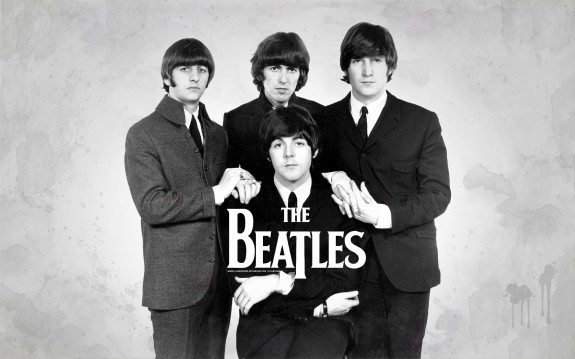
Music licensing can be seen in music we hear on the radio, in movies and on Television. For example if Cadbury Chocolates decided to use one of The Beatles songs for their new ad campaign, Cadbury would have to buy the rights to use that song from the owner of the copyright. When considering the licensing process from the perspective of a band or artist, licensing lets people use copyrighted material on other forms of media, which include radio, Television etc. While the owner of the copyright can get back money they have spent on creating the material.

The parties involved in the process include the music licensor and the licensee. The Licensor is the party that owns the copyrighted material, which could be for example an artist, a band or even a record company. The music licensee is the person who is given the rights to use the material in the media type specified in the agreement.

Music licensing is based on the fact that those who perform in a public place should get permission from the owner of the copyright. A public performance can be defined as a place where a performance occurs where people gather or where music is transmitted to the public. However, there are a few exemptions, which state that permission is not required for worship services that are not broadcasted or for performances used by educational institutions.

It would be impossible for songwriters, composers, music publishers and lyricists to monitor the hundreds and thousands of businesses that use music. Therefore, there are organisations like ASCAP and BMI that keep track of all copyrighted music performances and broadcasts.

How to get band gigs for your band, local band, or garage band

Booking your band with a gig can sometime feel like a daunting task. Here are some tips that can help your band get started:

Press Kit- The band’s press kit is, basically, a brief introduction to the band. The quality of your press kit would greatly depend on your budget. Therefore, start off with deciding on your budget, and then decide on the contents of the press kit. Generally, a press kit would include the name of the band members, the equipment that they own, the genre of music, etc.

Demo CD - To give your club owner a taste of your band’s music, you should record a couple of your tracks on a CD. This can be done by buying or renting a portable home recording or by buying studio time.

Open mic nights - You could start by checking local clubs if they have open mic nights. This is a great way for upcoming bands to gain confidence to perform to a live audience. Check your local magazines, newspapers, and web sites for open microphone nights in your area.

Offer to open for free - The truth is that most upcoming bands would not get paid at the start. To connect with your audience offer to open free for bands whose genre of music is similar to your own. To make other bands aware of your band, create your own business cards, and give them out to bands that you think are similar to yours.